
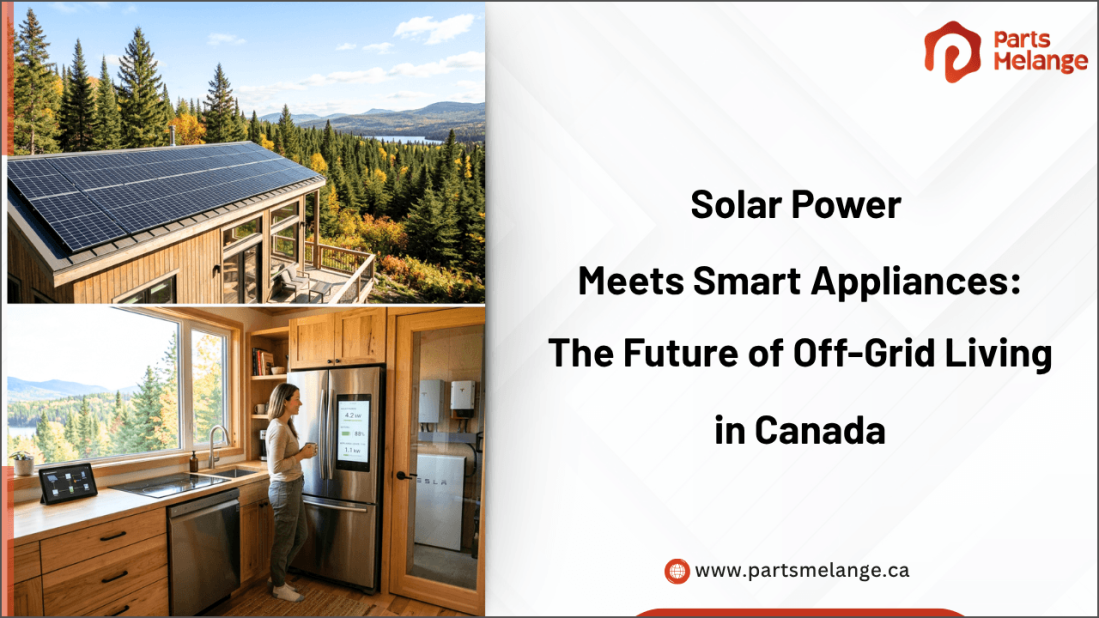
Solar power is giving off-grid homes in Canada a practical way to generate electricity without relying on a traditional utility connection. With the right system, solar panels and battery storage can support everyday household needs while adapting to changing sunlight and seasonal conditions.
Smart appliances can further improve how this electricity is used. Features such as scheduling, energy monitoring, and adjustable operating modes allow homeowners to manage appliance use around available solar power and reduce unnecessary energy consumption.
This guide covers the role of solar energy, smart appliance integration, energy management, and emerging technologies for off-grid homes in Canada.
The Role of Solar Energy in Modern Off-Grid Canadian Homes
An off-grid home operates independently of the public electricity grid and generates its own power through sources such as solar energy. For many Canadian homes in remote areas, solar panels can provide daytime electricity, while battery storage keeps surplus energy available when sunlight is limited.
The effectiveness of a solar system depends on several practical factors:
Solar panel capacity: Determines the amount of electricity the system can generate under suitable sunlight conditions.
Battery storage: Keeps surplus electricity available for nighttime and low-solar periods.
Inverter capacity: Determines how much electrical load can operate at the same time.
Seasonal sunlight: Shorter winter days can reduce available solar generation.
Weather and snow: Cloud cover and snow accumulation can temporarily lower output.
Household demand: Heating, refrigeration, cooking, water heating, and other appliances determine how much electricity the home needs.
By matching solar generation with household demand, homeowners can make better use of available electricity and reduce unnecessary reliance on stored battery power.
How Smart Appliances Adapt to Variable Solar Power Availability
Solar generation changes throughout the day, so off-grid homes need to manage appliance use around available electricity. Smart appliances can support this process through scheduling, delay-start functions, energy monitoring, and adjustable operating modes. These features allow flexible household tasks to be moved toward periods when solar generation is higher.
Scheduling Appliances to Operate During Peak Solar Production
Smart appliances can be programmed to run during daytime periods when solar panels are producing electricity. This can reduce the need to draw power from the battery for tasks that do not need to be completed immediately.
Example: A washing machine can be scheduled for 11 a.m. instead of 8 p.m., allowing the cycle to use available daytime solar power rather than relying primarily on stored battery energy.
Using Delay-Start Controls to Shift Flexible Household Loads
Delay-start functions allow appliances to begin their cycles at a later time. This is useful for dishwashers, washing machines, and other equipment where the exact operating time is flexible.
Example: A dishwasher loaded after dinner can be set to start at 10 a.m. the following day, shifting its electricity demand from an evening battery-use period to a daytime solar-production period.
Monitoring Appliance Consumption to Identify High-Energy Loads
Energy-monitoring features can provide information about electricity consumed during individual appliance cycles. Homeowners can use this information to identify which loads require more energy and adjust their operating schedules accordingly.
Example: If an appliance consumes significantly more electricity than other household loads, the homeowner can schedule it during stronger solar-production periods instead of operating it when the battery is carrying the household demand.
Using Smart Water Heating to Store Solar Energy as Heat
Water heating can become a flexible load because the energy does not need to be consumed at the exact moment the water is heated. A smart water heater can operate when solar electricity is available and store the resulting thermal energy for later use.
Example: A water heater can be scheduled around midday solar production, providing hot water for evening use without requiring the heating element to run heavily during the evening.
Coordinating Multiple Appliances Through Energy Management
A home energy-management system can coordinate appliance operation to prevent several high-demand loads from running simultaneously. This helps manage the electrical load placed on the inverter and reduces unnecessary battery discharge.
Example: The system can prioritize water heating around midday, schedule the dishwasher later, and postpone laundry if available solar power or battery capacity is insufficient.
Together, these controls help an off-grid home match flexible appliance demand with available solar generation, making better use of daytime electricity while preserving battery capacity for essential nighttime loads.
Managing Energy Demand With Smart Technology in Off-Grid Homes
Off-grid homes need to carefully balance electricity generation with daily household demand. Smart energy technology can monitor consumption, schedule flexible appliances, and manage high-demand loads based on available solar power and battery capacity. This helps reduce unnecessary battery use while keeping essential appliances operating.
The following strategies can help manage household energy demand in an off-grid home:
Energy Management | Example Application | Main Benefit |
Load scheduling | Run laundry during strong daytime solar production | Increases direct solar electricity use |
Load prioritization | Give refrigeration and lighting priority | Protects essential household loads |
Energy monitoring | Track appliance-level electricity consumption | Identifies high-energy appliances |
Peak-load management | Avoid running multiple high-power appliances together | Reduces sudden inverter demand |
Battery management | Reserves stored power for evening use | Preserves energy for low-solar periods |
Using these strategies together allows homeowners to coordinate solar generation, appliance operation, and battery storage. This can make available electricity more useful throughout the day while preserving stored power for essential loads during low-solar periods.
Emerging Innovations Shaping the Future of Off-Grid Living in Canada
The future of off-grid living is moving toward integrated energy systems where solar panels, battery storage, smart appliances, and energy-management controls work together. These technologies help homeowners use solar electricity more effectively while managing changing household demand.
Advanced Battery Storage for Better Solar Energy Utilization
Battery technology is becoming more important for making solar power available beyond daylight hours.
Stores surplus electricity generated during periods of strong solar production.
Provides power during nighttime and low-solar periods.
Battery monitoring helps track available stored energy.
Expandable systems can support changing household electricity requirements.
Intelligent Energy-Management Systems for Off-Grid Homes
Energy-management technology can coordinate electricity generation, storage, and household consumption.
Monitors solar production and battery status.
Tracks household electricity demand.
Helps prioritize essential loads.
Can schedule flexible appliances around available solar power.
Connected Appliances That Respond to Energy Availability
Smart appliances provide greater control over when household electricity is consumed.
Support scheduled and delayed operation.
Allow laundry and dishwashing to be shifted to daytime solar periods.
Provide information about appliance energy consumption.
Help homeowners adjust appliance use based on available energy.
Automated Load Management for Changing Solar Conditions
Automated controls can prevent unnecessary simultaneous demand from multiple appliances.
Reduces the chance of several high-demand appliances operating together.
Can postpone nonessential loads during low-solar periods.
Helps preserve battery power for essential appliances.
Improves coordination between appliance demand and available solar electricity.
Solar Forecasting for Smarter Appliance Scheduling
Forecast-based technology can make appliance scheduling more responsive to expected solar conditions.
Uses expected solar availability to plan flexible loads.
Can schedule energy-intensive tasks during stronger production periods.
Helps conserve battery energy when lower solar generation is expected.
Supports more consistent energy management across changing seasons.
Together, these innovations are making off-grid homes more responsive, automated, and efficient, with solar generation and household electricity use increasingly managed as one connected system.
Summary: The Future of Solar-Powered Smart Homes in Canada
Solar power can give off-grid Canadian homes greater control over how they generate, store, and use electricity. By combining solar panels with battery storage and suitable energy-management controls, homeowners can use daytime solar generation for household needs while keeping stored energy available for nighttime and low-solar periods.
Smart appliances add flexibility by allowing tasks such as laundry, dishwashing, and water heating to be scheduled around available solar power. As battery storage, smart controls, and microgrid technologies continue to develop, off-grid homes can become more efficient at balancing changing energy production with everyday household demand.
Key Takeaways
Solar panels provide electricity for off-grid homes without a utility connection.
Battery storage keeps excess solar energy available when production is low.
Smart appliances can shift flexible loads toward periods of stronger solar generation.
Energy-management systems can help control peak household demand.
Seasonal sunlight, weather, and household consumption should be considered when planning an off-grid system.
Advanced battery storage, smart controls, appliances, and solar forecasting are shaping the future of off-grid living in Canada.
Looking for home appliance replacement parts for repairs and maintenance? PartsMelange offers a range of replacement parts for appliances like refrigerators, washing machines, dryers, dishwashers, stoves, and ovens, helping homeowners maintain their appliances and keep everyday household tasks running smoothly.
References:
https://natural-resources.canada.ca/energy-efficiency/solar-photovoltaic-energy-buildings
FAQs
How do smart appliances reduce battery usage in an off-grid home?
They can shift flexible tasks to periods when solar power is available, reducing the need to draw electricity from the battery for those tasks.
What happens when solar production is lower than household demand?
The battery can supply stored electricity. If solar generation remains low for an extended period, the system may need to reduce nonessential loads or use a backup power source.
Does winter affect solar power production in Canadian homes?
Yes. Shorter daylight hours, cloud cover, and snow can reduce solar generation. Off-grid systems should therefore be planned around seasonal energy production rather than summer output alone.
Disclaimer: This blog is for informational purposes only and provides general information about solar power, smart appliances, and off-grid home energy management. |







Please complete your information below to login.
Sign In
Create New Account