
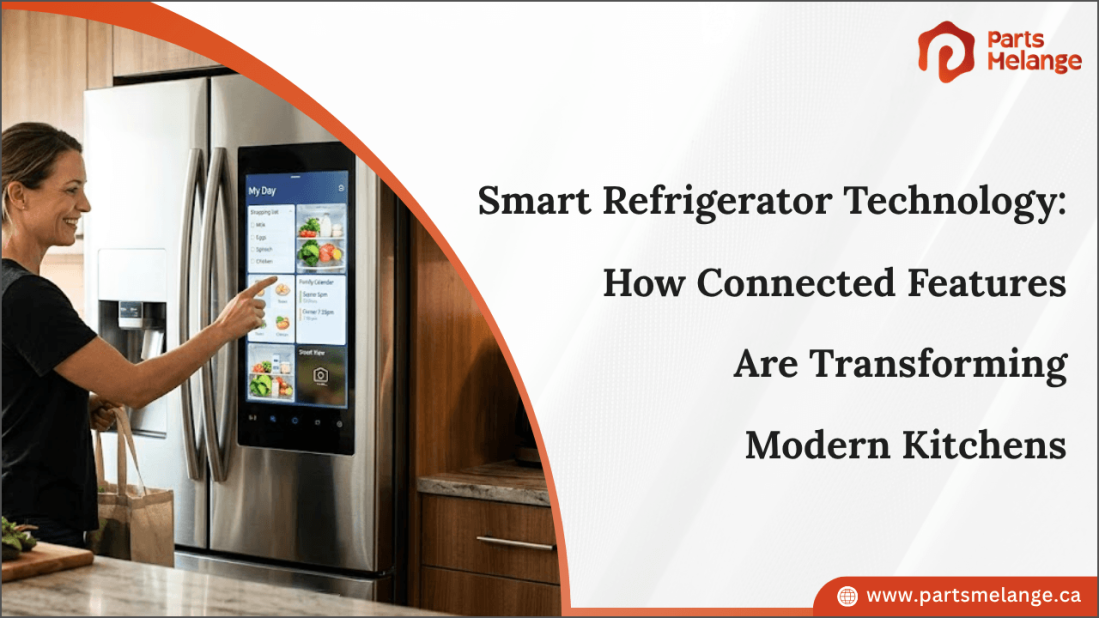
Refrigerators are no longer limited to keeping food cold. Smart refrigerator technology combines traditional cooling systems with Wi-Fi connectivity, sensors, cameras, digital controls, and mobile apps to give users more control over food storage and appliance operation.
Connected features can monitor temperatures, send door-open alerts, help track food items, and allow users to adjust certain settings remotely. These functions are making everyday kitchen tasks more convenient while giving homeowners greater visibility into refrigerator performance.
This guide explains how smart refrigerator technology works, its key connected features, major benefits, and future trends.
What Is Smart Refrigerator Technology and How Does It Work?
Smart refrigerator technology combines standard refrigeration components with sensors, Wi-Fi connectivity, digital controls, cameras, and software. Unlike conventional refrigerators, smart models can collect operating data, communicate with connected devices, and provide users with real-time information about the appliance.
The technology works by using sensors to monitor conditions such as temperature, humidity, and door position. A control board processes this information and adjusts cooling operation when needed. With an internet connection, the refrigerator can also send data and alerts to a smartphone app, allowing users to monitor or control supported functions remotely.
Key components typically include:
Temperature sensors: Monitor internal conditions and help maintain the selected temperature.
Door sensors: Detect when refrigerator or freezer doors are opened or left open.
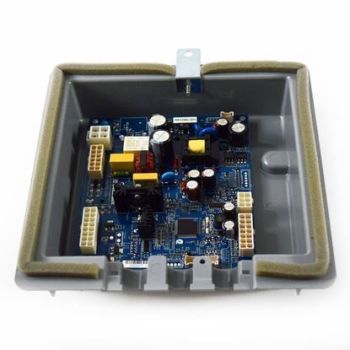
Control board: Processes sensor information and manages cooling functions.
Wi-Fi connectivity: Connects the refrigerator to a mobile app or smart-home network.
Internal cameras: Let users view refrigerator contents on supported models.
Mobile app: Provides remote monitoring, alerts, and selected control functions.
For example, if the refrigerator door remains open, the door sensor detects the condition and the connected system can send an alert to the user's phone. Similarly, an abnormal temperature reading can trigger a notification, allowing the user to investigate the issue before food storage conditions deteriorate.
How Smart Refrigerators Have Evolved Beyond Basic Cooling
Refrigerators have progressed from simple cooling appliances to digitally controlled and connected kitchen devices. Conventional models focused mainly on maintaining cold temperatures, while electronic models introduced better temperature regulation and automated functions. As sensor technology and connectivity developed, refrigerators gained more ways to monitor operation and interact with users.
The evolution can be seen through these major stages:
Conventional refrigerators: Provided basic cooling with manual temperature adjustment.
Electronic refrigerators: Added digital controls and more precise temperature regulation.
Sensor-equipped refrigerators: Used sensors to improve temperature monitoring and cooling response.
Connected refrigerators: Added internet connectivity for remote access and notifications.
Smart refrigerators: Combined connectivity with software, automation, food-management tools, and intelligent functions.
This progression has expanded the refrigerator's role beyond food preservation. Modern smart models can support kitchen organization and everyday decision-making while still performing their core cooling function.
Which Connected Features Are Transforming Modern Kitchens?
Smart refrigerators are becoming more useful because their connected features address practical kitchen tasks rather than simply adding digital controls. Depending on the model, these features can help users monitor the appliance, check food supplies, organize groceries, and access information remotely.
Remote Smartphone Access for Refrigerator Control
Wi-Fi connectivity allows compatible refrigerators to communicate with a smartphone app. Users can check appliance status, receive notifications, and control selected settings without being physically near the refrigerator.
Example: LG smart refrigerators with ThinQ® technology allow users to monitor and control compatible refrigerator functions from a smartphone.
Built-In Cameras for Checking Refrigerator Contents
Interior cameras allow users to view shelves and stored food through a compatible display or smartphone app. This can make grocery shopping easier by providing a quick look at what is already available.
Example: Samsung Bespoke AI refrigerators with AI Vision Inside™ and Family Hub™ can use internal cameras and connected features to help users see and track refrigerator contents through compatible SmartThings functions.
Smart Temperature and Door-Open Alerts
Connected sensors can monitor refrigerator conditions and detect when a door remains open for an extended period. The system can send an alert when a monitored condition requires attention.
Example: LG ThinQ®-enabled smart refrigerators offer remote monitoring capabilities, while connected systems can help users monitor temperature and appliance status through supported applications.
Food Inventory and Grocery Management Tools
Some smart refrigerators include inventory features that help users track stored items, create shopping lists, or receive reminders. Advanced models may use cameras and software to assist with identifying food items.
Example: Samsung Family Hub refrigerators integrate with SmartThings Food to support food inventory management, shopping lists, and meal-related planning.
Voice Control and Smart-Home Integration
Compatible smart refrigerators can connect with voice assistants and other smart-home devices. This allows users to access certain refrigerator functions or information through voice commands.
Example: Samsung Family Hub refrigerators can connect with the SmartThings ecosystem and support compatible voice-control features for managing connected home functions.
Smart Recipe and Meal Planning Features
Some models connect refrigerator inventory with recipe and meal-planning functions. These tools can help users find ways to use ingredients already available instead of letting them remain unused.
Example: Samsung Family Hub with SmartThings Food can connect food information with recipe recommendations and meal-planning tools based on available ingredients.
Together, these features make refrigerators more useful by simplifying food monitoring, grocery planning, and everyday kitchen tasks.
How Smart Refrigerators Improve Food Management and Energy Efficiency
Smart refrigerator technology can improve everyday kitchen management by connecting food storage with monitoring and automated functions. The main benefits are better food organization, reduced waste, quicker response to temperature changes, and greater awareness of appliance operation.
Area | Practical Impact of Smart Technology |
Food Waste | Helps users identify stored food that should be consumed sooner, reducing forgotten items. |
Grocery Planning | Makes it easier to check existing supplies before purchasing additional groceries. |
Temperature Control | Monitors storage conditions and can alert users when temperatures move outside the selected range. |
Cooling Response | Some advanced refrigerators adjust cooling operation according to temperature changes and usage patterns. |
Energy Awareness | Connected monitoring can provide information about appliance operation and energy-related settings. |
Maintenance Planning | Diagnostic functions can identify certain appliance issues and provide maintenance-related notifications. |
Overall, smart refrigerator technology links food management, cooling control, and appliance monitoring, giving households more information to manage their refrigerator efficiently.
What Are the Latest Trends Shaping the Future of Smart Refrigerators?
Smart refrigerator technology is moving toward greater automation, smarter cooling, predictive diagnostics, and closer integration with home energy systems. Instead of simply connecting a refrigerator to a smartphone, newer developments aim to make the appliance more responsive to operating conditions and household demand.
Predictive Diagnostics and Early Fault Detection
Future refrigerators may use sensor data, operating history, and software analysis to identify unusual patterns before they develop into major component failures. This could help detect changes in cooling performance and give users earlier warning of potential problems.
Example: LG refrigerators with ThinQ and Smart Diagnosis show how connected diagnostic technology can provide appliance information and assist with identifying certain operational issues.
AI-Driven Adaptive Cooling
Refrigeration systems are moving toward more intelligent cooling strategies that can respond to changing internal and external conditions. AI-based controls could evaluate temperature changes, door activity, ambient conditions, and cooling requirements to adjust operation more precisely.
Example: Samsung refrigerators featuring AI Hybrid Cooling demonstrate the development of more intelligent cooling systems designed to respond to changing refrigeration conditions.
Autonomous Appliance Operation
The next generation of smart refrigerators may require less manual input by using usage patterns and operating data to manage selected functions automatically. This moves connected appliances toward more adaptive operation, where the refrigerator can respond to household routines rather than relying entirely on fixed settings.
Example: LG refrigerators with Smart Fresh Air analyze three weeks of usage patterns and increase cooling before expected peak-use periods, showing how refrigerator operation can adapt to recurring household behaviour.
Advanced Energy Optimization
Smart refrigerator technology is moving toward more intelligent energy management. Future systems could analyze operating conditions, cooling demand, and usage patterns to optimize refrigerator operation while maintaining suitable storage temperatures. This can help make energy consumption more visible and support more efficient appliance operation.
Example: In Canada, ENERGY STAR® certification helps consumers identify refrigerators that meet higher energy-efficiency requirements, while the EnerGuide label provides information about a model’s annual energy consumption for easier comparison.
Deeper Smart-Home Integration
Future refrigerators are likely to communicate more closely with other connected appliances and home systems. Integration with home energy management, automation platforms, and other household devices could allow refrigerator operation to become part of a coordinated smart-home environment.
Example: Bosch refrigerators with Home Connect show how connected refrigeration can operate within a broader smart-home ecosystem alongside compatible household devices.
These developments indicate that the future of smart refrigerators will focus on autonomous operation, adaptive cooling, predictive diagnostics, energy optimization, and wider ecosystem connectivity rather than simply adding more connected features.
Summary: Are Smart Refrigerators the Future of Connected Kitchens?
Smart refrigerators have evolved from basic cooling appliances into connected kitchen devices that can monitor conditions, manage food information, and provide remote access. Features such as smartphone connectivity, interior cameras, temperature alerts, inventory tools, and smart-home integration can simplify everyday kitchen tasks.
As AI, predictive maintenance, and adaptive cooling continue to develop, smart refrigerators are likely to become more automated and responsive. However, connected features work alongside essential refrigeration components, so proper maintenance and efficient cooling systems remain important for long-term performance.
Key Takeaways
Smart refrigerators combine traditional cooling with connected technology.
Sensors and software support better monitoring and appliance control.
Cameras and inventory tools can simplify grocery and food management.
Connected alerts can help users respond to temperature or door-related issues.
AI and predictive maintenance are shaping the next generation of smart refrigerators.
Smart-home integration is expanding the role of refrigerators in connected kitchens.
Keep your smart refrigerator operating efficiently with trusted home appliance parts at PartsMelange. Find refrigerator replacement components such as evaporator fan motors, door gaskets, water inlet valves, ice maker assemblies, control boards, and sensors to support proper cooling and everyday performance.
References:
https://www.samsung.com/us/refrigerators
https://news.samsung.com/us/samsung-expands-ai-capabilities-bespoke-ai-family-hub-refrigerators-major-update
https://www.lg.com/ca_en/buying-guides/refrigerator-spec-library
FAQs
Do smart refrigerators require a smartphone?
No. A smartphone is not necessary for basic refrigerator operation. However, many connected features, including remote monitoring, alerts, and settings management, require a compatible mobile application.
Are smart refrigerators difficult to maintain?
No. Smart refrigerators require standard maintenance such as cleaning condenser areas, checking door seals, maintaining airflow, and installing software updates when required by the manufacturer.
Can smart refrigerator technology improve food safety?
Smart technology can support safer food storage by monitoring temperatures and providing alerts when conditions change. However, proper temperature settings, food handling, and regular maintenance remain essential.
What happens when a smart refrigerator loses internet connectivity?
The refrigerator's primary cooling functions generally continue operating, while internet-based features such as remote access, smartphone alerts, cloud services, and some smart-home integrations may temporarily stop working.
Disclaimer: This blog is for informational purposes only and provides general information about smart refrigerator technology, connected features, and their benefits. |







Please complete your information below to login.
Sign In
Create New Account