
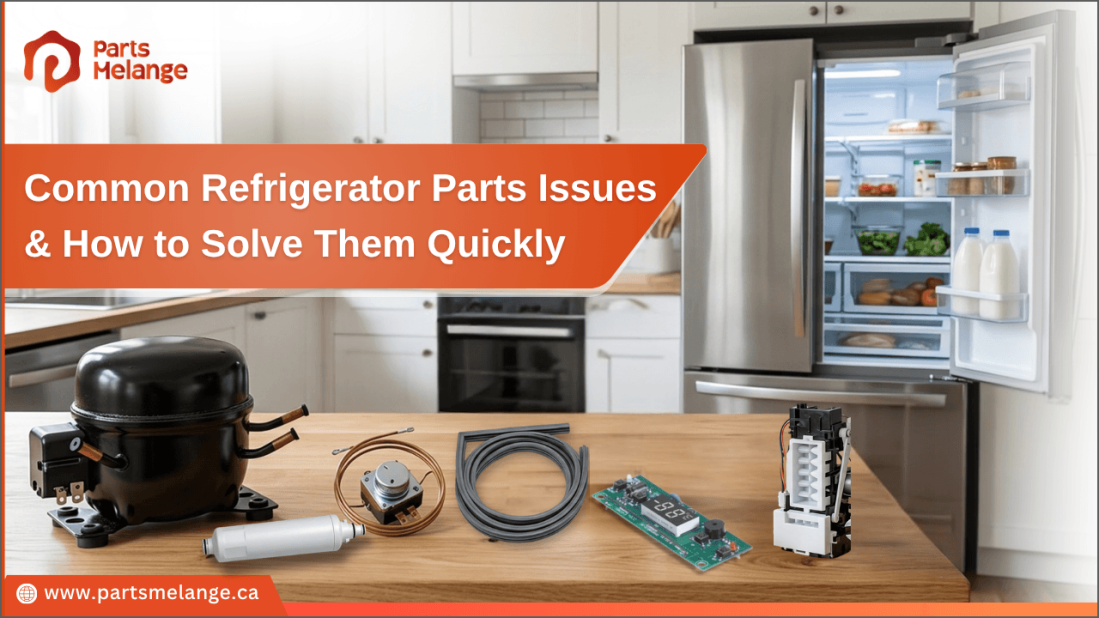
Refrigerators are essential appliances, but over time, common refrigerator parts issues can affect their performance and cooling efficiency. Problems like faulty components, airflow blockages, or worn-out parts can lead to inconsistent temperatures, higher energy use, or even complete cooling failure if not addressed early.
Understanding these issues and applying quick solutions with reliable appliance parts can help maintain smooth operation and prevent costly repairs. With proper care and timely fixes, most refrigerator problems can be managed easily, ensuring reliable performance and longer appliance life.
This blog explains common refrigerator parts issues and how to solve them quickly for better performance and efficiency.
Understanding Common Refrigerator Parts Issues & Why They Matter
Refrigerator performance depends on specific parts doing precise jobs. When the thermostat fails, it cannot regulate temperature accurately. Dirty condenser coils trap heat and reduce cooling efficiency. A weak evaporator fan cannot circulate cold air evenly, causing warm spots. Damaged door gaskets allow cold air to leak, forcing the compressor to run longer. These are common, measurable issues that directly affect how well the unit operates.
These issues matter because they create clear, costly problems:
Food Spoilage: Temperatures above safe levels (typically 1–4°C) cause faster food deterioration.
Higher Electricity Use: Longer compressor cycles increase power consumption significantly.
Component Failure: Overworked compressors and fans wear out faster and fail sooner.
Uneven Cooling: Poor air circulation leads to inconsistent storage conditions.
Frequent Repairs: Ignoring small faults leads to repeated service needs and part replacements.
Top 10 Refrigerator Parts Issues & How to Fix Them Fast
Refrigerator problems often arise from specific part failures that directly impact cooling performance and efficiency. Identifying the issue early and fixing it with the right refrigerator replacement parts can help prevent food spoilage, reduce energy consumption, and avoid costly repairs.
Compressor Failure and Frequent Overheating Issues
Common Cause: The compressor may overheat due to continuous operation, poor ventilation, dirty coils, or internal electrical faults that affect performance.
Quick Fix:
Ensure proper airflow around the refrigerator
Clean condenser coils thoroughly
Check and tighten wiring connections
Replace the compressor if it is not functioning
Dirty Condenser Coils Due to Dust and Debris Buildup
Common Cause: Accumulated dust, grease, and debris prevent proper heat release, forcing the refrigerator to work harder than necessary.
Quick Fix:
Unplug the refrigerator
Use a brush or vacuum to clean coils
Clean coils every 3–6 months
Keep the surrounding area dust-free
Refrigerator Evaporator Fan Not Working Properly
Common Cause: Fan motor wear, electrical faults, or ice buildup can restrict airflow inside the refrigerator.
Quick Fix:
Defrost the refrigerator to remove ice
Check if the fan spins freely
Inspect for unusual noise
Replace the fan motor if faulty
Faulty Thermostat Causing Temperature Control Issues
Common Cause: A malfunctioning thermostat may fail to detect and regulate internal temperature accurately.
Quick Fix:
Adjust and test temperature settings
Monitor cooling performance
Replace the thermostat if unresponsive
Refrigerator Defrost System Failure Leading to Ice Buildup
Common Cause: Problems with the defrost heater, timer, or control board can stop automatic defrost cycles.
Quick Fix:
Manually defrost the freezer
Inspect defrost heater and timer
Replace faulty defrost components
Restart the refrigerator
Damaged Refrigerator Door Gasket from Wear and Tear
Common Cause: Over time, the gasket may crack, loosen, or lose flexibility, reducing its sealing ability.
Quick Fix:
Inspect the gasket for cracks or gaps
Clean the gasket with mild soap
Check door closing alignment
Replace the gasket if the seal is weak
Clogged Drain Hole from Food Particles or Ice Blockage
Common Cause: Debris or frozen water can block the drain line, causing water to collect inside the refrigerator.
Quick Fix:
Locate the drain hole
Flush with warm water
Use a thin tool to remove the blockage
Ensure proper water flow
Start Relay Failure Due to Electrical Problems
Common Cause: Electrical wear or faults can prevent the relay from starting the compressor efficiently.
Quick Fix:
Listen for clicking sounds
Test relay for continuity
Replace the faulty relay
Restart the unit
Low Refrigerant Gas from System Leakage
Common Cause: Leaks in the sealed system reduce refrigerant levels, affecting cooling performance.
Quick Fix:
Check for signs of poor cooling
Call a certified technician
Repair the refrigerant leak
Refill the gas to the proper level
Control Board Malfunction Due to Circuit Damage
Common Cause: Power surges, moisture, or aging components can damage the control board.
Quick Fix:
Reset the refrigerator
Inspect for burnt components
Test electrical connections
Repair or replace the control board
By addressing these issues promptly and fixing them with reliable refrigerator parts, it helps maintain efficient operation, extend lifespan, and ensure consistent cooling performance.
When to Repair vs Replace Refrigerator Parts
Deciding whether to repair or replace refrigerator parts depends on factors like cost, appliance age, and performance. Minor issues can usually be fixed easily, while major failures may require replacement. Choosing the right option helps avoid repeated repairs and ensures better efficiency.
The table below highlights key factors to help you decide between repairing and replacing refrigerator parts:
Factor | When to Repair | When to Replace |
Type of Issue | Minor problems like clogged drains, dirty coils, or loose components | Major failures, such as compressor or control board damage |
Cost Consideration | Repair costs are low and budget-friendly | Repair costs are high and close to replacement cost |
Warranty Status | The part is under warranty or recently replaced | Warranty has expired and repair costs are recurring |
Appliance Age | The refrigerator is relatively new (under 5–7 years) | Appliance is older (8–10+ years) |
Frequency of Issues | The problem is isolated and not recurring | Frequent breakdowns and repeated repairs |
Performance After Fix | Repair restores normal performance quickly | Cooling issues persist even after repairs |
Energy Efficiency | Current efficiency is still acceptable | Replacement improves energy savings and performance |
Choosing between repair and replacement at the right time helps reduce long-term costs and ensures your refrigerator continues to perform efficiently without frequent breakdowns.
Preventive Maintenance Tips to Avoid Refrigerator Part Failures
Regular preventive maintenance plays a crucial role in keeping your refrigerator running efficiently and avoiding unexpected part failures. Simple routine checks and cleaning can help maintain consistent cooling performance, reduce energy consumption, and extend the overall lifespan of the appliance.
Here are some essential maintenance tips to help prevent common refrigerator part failures:
Clean refrigerator condenser coils every 3–6 months to ensure proper heat dissipation
Check and replace damaged refrigerator door gaskets to prevent air leaks
Avoid overloading the refrigerator to maintain proper airflow
Set and maintain the correct temperature settings
Defrost the freezer regularly to prevent ice buildup
Keep the drain hole clean to avoid water leakage
Ensure proper ventilation space around the refrigerator
Inspect power connections and components for safety
Following these maintenance practices regularly helps minimize breakdowns, improve efficiency, and ensure your refrigerator operates smoothly for years without frequent repairs.
Explore How AI Powered Refrigerators Transforming the Future of Smart Home Living and discover how smart features are improving efficiency and everyday convenience.
Summary: Fix Refrigerator Problems Faster with Smart Maintenance & Timely Repairs
Refrigerator issues often start small but can quickly turn into major problems if not addressed on time. Understanding common part failures like compressor issues, dirty coils, or faulty thermostats helps in identifying the root cause early and applying the right fix. Quick action not only restores cooling performance but also prevents food spoilage and costly breakdowns.
Regular maintenance and timely repairs play a key role in keeping your refrigerator running efficiently. Simple practices like cleaning coils, checking seals, and monitoring performance can significantly extend the lifespan of the appliance and reduce energy consumption over time.
Key Takeaways
Identify common refrigerator part issues early to avoid major failures
Perform regular maintenance to improve efficiency and performance
Address minor problems quickly to prevent costly repairs
Know when to repair and when to replace parts
Maintain proper usage habits to extend appliance lifespan
By following these practices, you can ensure reliable performance and keep your refrigerator running smoothly for years.
Upgrade your refrigerator’s performance with trusted appliance replacement parts from PartsMelange. Explore a wide range of high-quality components, including compressors, thermostats, evaporator fans, door gaskets, and control boards, designed to ensure efficient cooling and long-lasting appliance performance.
FAQs
What is the most common refrigerator part that fails?
The most common issue is dirty condenser coils or a faulty evaporator fan. These components directly affect cooling performance and can lead to temperature inconsistencies if not maintained regularly.
How do I know if my refrigerator thermostat is faulty?
Signs include inconsistent temperatures, the fridge being too warm or too cold, or the compressor not turning on/off properly. If adjusting the thermostat doesn’t change the temperature, it may need replacement.
Why is my refrigerator not cooling but the freezer works?
This usually happens due to a faulty evaporator fan, blocked air vents, or frost buildup in the defrost system. Cold air from the freezer is not properly circulating to the refrigerator section.
How often should condenser coils be cleaned?
Condenser coils should be cleaned every 3–6 months. Regular cleaning helps maintain cooling efficiency and reduces strain on the compressor.
Is it worth repairing an old refrigerator compressor?
If the refrigerator is older than 8–10 years, replacing the compressor may not be cost-effective. In such cases, investing in a new appliance is often a better long-term option.
Disclaimer: This blog is for informational purposes only and provides general guidance on refrigerator issues and maintenance. Repair methods may vary by model, and improper handling can lead to damage or safety risks. |







Please complete your information below to login.
Sign In
Create New Account