
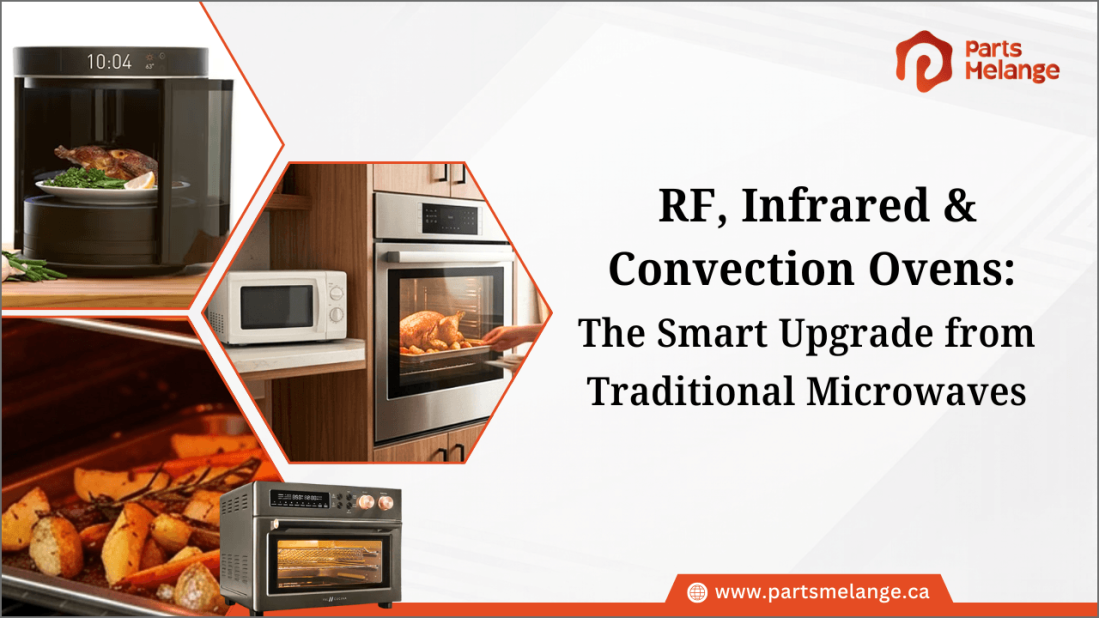
Traditional microwaves are convenient for quick reheating, but they often struggle with uneven heating, soggy textures, and a lack of browning. This limits their use for cooking methods like baking or roasting, where consistency and texture matter. As cooking needs evolve, depending only on a microwave can affect both food quality and overall efficiency in the kitchen.
RF (Radio Frequency), Infrared, and Convection ovens offer a more advanced cooking solution. RF ensures deep, even heating, infrared delivers fast crisping, and convection provides uniform cooking with hot air circulation. These technologies improve speed, texture, and versatility, making them a smart upgrade for better cooking results.
This blog explains how these modern ovens outperform traditional microwaves and help you choose the right upgrade.
What Traditional Microwaves Lack in Modern Cooking
Traditional microwaves are designed for speed and convenience, but they often fall short when it comes to delivering quality cooking results. Many users notice uneven heating, where food is hot in some areas and cold in others, making meals less enjoyable.
They also lack the ability to enhance texture, which means no proper browning, crisping, or roasting. This limits their usefulness for a variety of cooking needs, especially when preparing dishes that require consistency, flavor development, and better presentation.
Common limitations of traditional microwaves include:
Uneven heating with noticeable hot and cold spots
No browning or crisping for improved texture
Limited functions beyond reheating and defrosting
Food may become soggy, dry, or rubbery
Not suitable for baking, roasting, or grilling
Limited control over cooking precision and consistency
Struggles with cooking larger or thicker portions evenly
Because of these limitations, many users are shifting toward advanced cooking technologies that offer better heat distribution, improved texture, and greater versatility, helping achieve more reliable and high-quality cooking results.
RF, Infrared & Convection Ovens and Their Advanced Cooking Technologies
RF, Infrared, and Convection ovens are advanced cooking technologies designed to improve cooking speed, consistency, and food quality compared to traditional microwaves. Each technology uses a different heating method, helping users achieve better results based on their cooking needs such as baking, roasting, crisping, or bulk preparation. These ovens make everyday cooking more efficient and reliable.
RF (Radio Frequency) Ovens: Speed Meets Precision
RF ovens are designed for fast and uniform cooking, especially for dense or bulk food items. They are widely used in commercial settings where consistency and efficiency are essential.
How RF Ovens Work: RF ovens use electromagnetic waves to penetrate food and generate heat internally, ensuring even cooking throughout.
Key Advantages
Faster cooking times compared to traditional methods
Even heat distribution with minimal cold spots
Ideal for large portions and dense foods
Best Use Cases
Bulk cooking in commercial kitchens
Reheating large quantities of food
Cooking dense items like meats and packaged meals
Infrared Ovens: Fast Surface Heating with Crisp Results
Infrared ovens focus on delivering intense surface heat, making them perfect for achieving crispy textures and visually appealing finishes.
How Infrared Ovens Work: They use radiant heat that directly heats the surface of the food instead of the surrounding air.
Key Advantages
Quick heating and reduced cooking time
Excellent browning and crisping results
Energy-efficient for short cooking cycles
Best Use Cases
Grilling and toasting
Finishing dishes with a crispy texture
Cooking items like pizzas, sandwiches, and meats
Convection Ovens: Even Cooking with Hot Air Circulation
Convection ovens are versatile and widely used for everyday cooking, offering consistent results across a variety of dishes.
How Convection Ovens Work: They use a fan to circulate hot air evenly inside the oven, ensuring uniform temperature distribution.
Key Advantages
Even cooking on all sides
Reduced cooking time and energy usage
Ability to cook multiple dishes simultaneously
Best Use Cases
Baking cakes, cookies, and pastries
Roasting vegetables and meats
General home and commercial cooking
Overall, these advanced oven technologies with efficient oven parts provide better efficiency, improved texture, and greater cooking control, making them a smart upgrade from traditional microwave ovens.
Key Benefits of Upgrading to RF, Infrared & Convection Ovens
Upgrading to RF, Infrared, and Convection ovens improves cooking performance by delivering faster heating, better texture, and more consistent results compared to traditional microwaves. These technologies use advanced appliance parts that enhance efficiency, temperature control, and overall cooking versatility across different food types.
These ovens are suitable for baking, roasting, grilling, and reheating, making them a practical choice for both home and commercial kitchens.
The comparison below highlights how RF, Infrared, and Convection ovens differ from traditional microwaves in key performance areas:
Feature | Traditional Microwaves | RF Ovens | Infrared Ovens | Convection Ovens |
Cooking Speed | Fast reheating only | Very fast for bulk cooking | Fast surface cooking | Moderate but efficient |
Heating Quality | Uneven heating | Deep and uniform heating | Direct surface heating | Even hot air circulation |
Food Texture | Often soggy or rubbery | Consistent internal results | Crispy and browned finish | Soft and evenly cooked |
Cooking Functions | Reheating, defrosting | Bulk and industrial cooking | Grilling, toasting | Baking, roasting, general cooking |
Versatility | Very limited | High for large-scale use | Medium, specialized use | Very high, multi-purpose |
Energy Efficiency | Moderate | High efficiency | Efficient for short use | Energy-efficient daily use |
Overall, these ovens deliver improved cooking efficiency, better food quality, and greater versatility compared to traditional microwave systems.
How to Choose the Right Oven for Your Cooking Needs
Choosing the right oven depends on how you cook, what type of food you prepare most often, and whether you need it for home or commercial use. Each technology of RF, Infrared, and Convection ovens offers different strengths, so understanding your cooking needs helps you make a smarter and more practical decision. The right choice can improve efficiency, save time, and enhance overall food quality.
Key Factors to Consider
Type of Cooking You Do: If you mainly bake or roast, a convection oven is the best choice. For grilling, toasting, or achieving crispy textures, infrared ovens work better. For fast and bulk cooking, RF ovens are ideal.
Cooking Volume and Frequency: For large-scale or frequent cooking, RF ovens offer speed and consistency. For regular home use, convection ovens provide the best balance of performance and versatility.
Desired Texture and Results: If you want crispy, browned food, choose infrared ovens. For soft, evenly cooked dishes, convection ovens are more suitable. RF ovens focus on uniform internal cooking.
Energy Efficiency and Convenience: Modern ovens are more energy-efficient than traditional microwaves, but convection ovens are generally the most practical for everyday use due to their flexibility.
Overall, selecting the right oven comes down to matching the technology with your cooking style and daily requirements, ensuring better performance and long-term value.
Summary: RF, Infrared & Convection Ovens for Modern Cooking
RF, Infrared, and Convection ovens are modern cooking technologies designed to improve cooking speed, consistency, and food quality compared to traditional microwaves. Each oven works in a different way RF focuses on deep and even heating, infrared helps achieve quick browning and crisping, and convection ensures uniform cooking using circulating hot air. These technologies make cooking more efficient and help users get better results for everyday meals as well as bulk preparation.
Key Takeaways
RF ovens provide fast and even internal heating
Infrared ovens help achieve quick crisping and browning
Convection ovens ensure uniform cooking with hot air circulation
Offer better performance than traditional microwaves
Suitable for home kitchens and commercial cooking needs
Overall, these ovens make modern cooking faster, more consistent, and more efficient than traditional microwaves.
Shop quality appliance parts at PartsMelange to keep your kitchen appliances performing at their best. Explore reliable replacement parts for ovens, stoves, refrigerators, dishwashers, and more to ensure efficient performance and extend the life of your home appliances.
References:
https://www.whirlpool.com/blog/kitchen/microwave-vs-convection-oven.html
https://www.iqsdirectory.com/articles/industrial-oven/infrared-ovens.html
FAQs
Do these ovens save energy compared to microwaves?
Yes, all three technologies are designed to be more efficient, reducing cooking time and energy usage while improving cooking results.
Do RF, Infrared, and Convection ovens require special maintenance?
They require basic regular cleaning and routine checks, similar to other kitchen appliances. However, commercial RF ovens may need periodic professional servicing for best performance.
Are these ovens suitable for beginners?
Yes, especially convection ovens are easy to use for beginners. RF and infrared ovens may require some initial understanding, but they become simple with regular use.
Disclaimer: This blog is for informational purposes only and provides general insights about RF, Infrared, and Convection ovens. Results may vary based on usage and appliance type. |







Please complete your information below to login.
Sign In
Create New Account