
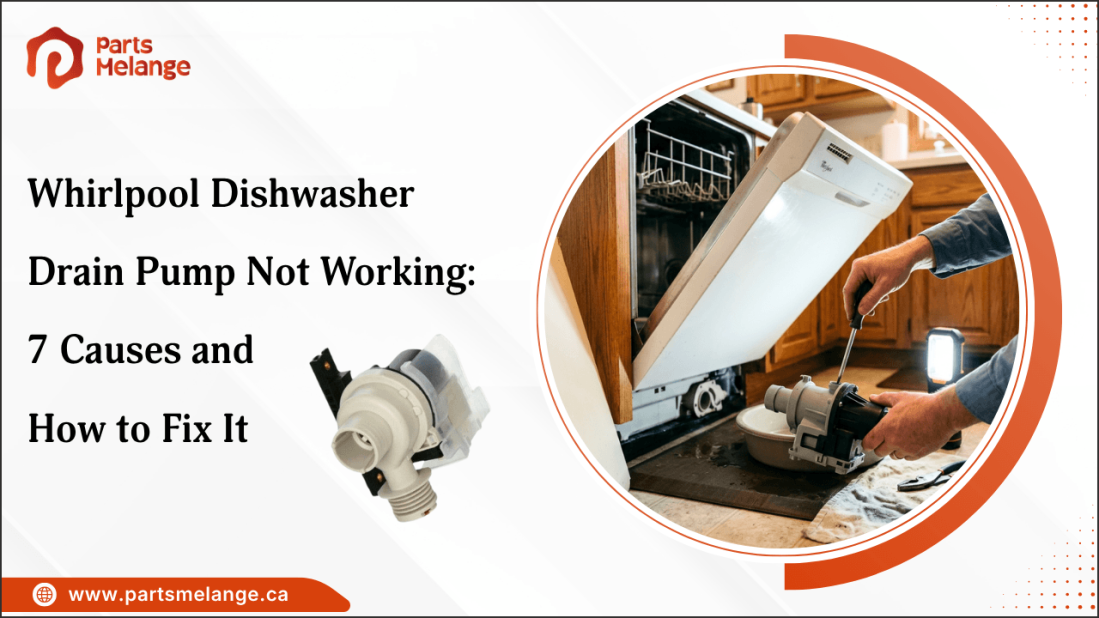
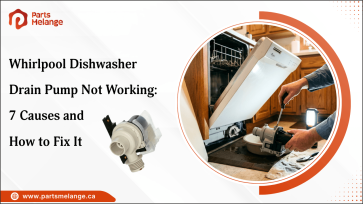
A Whirlpool dishwasher that does not drain properly can leave standing water at the bottom of the tub, cause unpleasant odours, and prevent the next wash cycle from starting correctly. The drain pump plays a key role in removing wastewater after each cycle, so any blockage, electrical issue, or pump failure can affect dishwasher performance.
Common reasons a Whirlpool dishwasher drain pump stops working include clogged filters, food debris inside the pump area, damaged drain pump components, faulty wiring, and drain hose blockages. When these issues affect dishwasher performance, compatible Whirlpool replacement parts, such as drain pumps, filters, and drain hoses, can help restore proper drainage and keep the appliance operating efficiently.
This guide explains how to identify drain pump problems, troubleshoot the issue step by step, and replace the pump if needed.
How to Tell If Your Whirlpool Dishwasher Drain Pump Is Not Working
A Whirlpool dishwasher drain pump removes wastewater from the tub at the end of the wash and rinse cycles. When the pump is not working correctly, the dishwasher may show several noticeable symptoms. Identifying these signs can help determine whether the problem is related to the pump or another part of the drainage system.
Look for these common signs of a drain pump problem:
Water remains in the tub: Standing water after a completed cycle can indicate that wastewater is not being pumped out properly.
Unusual pump noises: Humming, buzzing, grinding, or rattling sounds may indicate debris, a restricted impeller, or a damaged pump.
No pump operation: If there is no sound when the dishwasher enters the drain cycle, the pump may not be receiving power or its motor may have failed.
Slow or incomplete draining: Water may take longer than usual to drain or remain partially in the tub.
Drainage problems continue: If cleaning the filter and checking the drain hose does not resolve the issue, the pump may require further inspection.
These symptoms can also be caused by blockages or other drainage components, so confirming the exact cause is important before replacing the pump. Keep your Whirlpool dishwasher running smoothly with quality home appliance replacement parts from PartsMelange. Find Whirlpool dishwasher parts, such as drain pumps, filters, hoses, and other essential components, to restore proper drainage and maintain appliance performance.
What Causes a Whirlpool Dishwasher Drain Pump to Stop Working?
A Whirlpool dishwasher drain pump can stop working because of blockages, damaged components, electrical faults, or normal wear. These issues can prevent wastewater from leaving the dishwasher, resulting in standing water or incomplete drain cycles.
The table below outlines the common causes of Whirlpool dishwasher drain pump problems, why they occur, and what you can do to resolve them.
Cause | Why It Happens | What to Do |
Clogged dishwasher filter | Food particles and grease restrict water flow. | Remove and clean the filter regularly. |
Food debris or foreign objects in the pump area | Debris can block the impeller and prevent proper rotation. | Inspect the pump area and carefully remove visible debris. |
Blocked or kinked drain hose | Obstructions or bends restrict wastewater flow. | Check the hose for blockages and kinks, then clear or reposition it. |
Damaged drain pump impeller | Cracks or wear reduce the impeller's ability to move water. | Inspect the impeller and replace the pump assembly if necessary. |
Failed drain pump motor | Electrical or mechanical damage can prevent the motor from operating. | Have the pump tested and replace it if the motor has failed |
Faulty wiring or electrical connections | Loose or damaged connections can interrupt power to the pump. | Inspect the wiring and test the electrical supply. |
Faulty dishwasher control board | The control board may fail to send the correct signal to the pump. | Test the pump's power supply and control circuit. |
Identifying the cause of the drain pump problem helps determine whether cleaning, repairing, or replacing a component is necessary. Choosing the right dishwasher replacement parts can help restore proper drainage and dishwasher performance.
How to Troubleshoot a Whirlpool Dishwasher Drain Pump Step by Step
If your Whirlpool dishwasher is not draining, troubleshoot the drainage system systematically before replacing the drain pump. A clogged filter, blocked hose, or foreign object can create symptoms similar to a failed pump
Follow these troubleshooting steps to identify the cause of the drainage problem.
Step 1: Turn Off Power and Remove Standing Water
Disconnect the dishwasher from power before inspecting internal components. Remove standing water using a cup or towel so you can access the filter and pump area safely.
Step 2: Clean the Dishwasher Filter
Remove the lower rack and locate the filter assembly at the bottom of the dishwasher.
Remove the filter according to the model instructions.
Rinse it under warm water.
Remove trapped food particles or grease buildup.
Reinstall the filter securely.
A blocked filter is one of the easiest drainage problems to fix.
Step 3: Inspect the Drain Pump Area
Check the accessible pump area for food debris, broken glass, or other foreign objects. Carefully remove visible blockages without damaging the pump or impeller.
Step 4: Check the Drain Hose Connection
Inspect the drain hose underneath the sink and behind the dishwasher. Look for kinks, loose connections, or blockages near the sink drain or garbage disposal. Clear any obstruction and ensure the hose is positioned correctly. A clear drain hose allows the pump to remove wastewater properly.
Step 5: Listen During the Drain Cycle
After reinstalling the filter and ensuring all components are safely in place, restore power and run a drain cycle if the dishwasher can be operated safely
Step 6: Test the Drain Pump
If basic cleaning and hose checks do not resolve the issue, a qualified technician can test the drain pump motor and electrical connections using appropriate diagnostic tools. If the motor has failed, a compatible Whirlpool dishwasher drain pump may be required.
Step 7: Inspect the Control Board
If the pump does not receive the correct electrical signal, the control board may be malfunctioning. A qualified technician can test the control circuit to determine whether the board or another electrical component is responsible.
If the dishwasher still does not drain after these troubleshooting steps, consider replacing the faulty drain pump or contacting a qualified appliance repair professional for further diagnosis or replacement.
How to Replace a Whirlpool Dishwasher Drain Pump
If troubleshooting confirms that the Whirlpool dishwasher drain pump has failed, replacing it can restore proper wastewater removal.
Tools required for dishwasher drain pump replacement:
Screwdriver
Pliers
Towel or container for water
Before you order a Whirlpool compatible drain pump replacement, find your model number on the door frame or tub edge and check it against the compatible models listed for the drain pump to make sure it fits.
Follow these steps to safely remove the faulty drain pump and install a compatible replacement:
Step 1: Disconnect Power and Water Supply
Turn off electricity from the dishwasher circuit or unplug the unit. Shut off the water supply before moving the dishwasher.
Step 2: Access the Drain Pump
Remove the lower access panel or kick plate. Depending on the model, the drain pump may be located underneath the dishwasher tub.
Step 3: Disconnect the Old Pump
Remove the electrical connector and detach the drain hose connected to the pump. Release the locking mechanism or mounting screws holding the pump in place.
Step 4: Install the New Drain Pump
Install the new dishwasher drain pump in the same position as the original.
Reconnect:
Electrical connector
Drain hose
Mounting components
Ensure all connections are secure to keep the Whirlpool dishwasher drain pump from leaking after installation.
Step 5: Test the Dishwasher
Restore power and run a short cycle. Check that:
Water drains completely
No leaks appear underneath the dishwasher
The pump operates normally
Once the new drain pump is installed correctly, the dishwasher should drain wastewater properly and complete its wash cycles without drainage issues. If you are unsure about any repair step, consider contacting a qualified appliance repair professional for further inspection and assistance.
How to Prevent Whirlpool Dishwasher Drain Pump Problems
Regular maintenance can help reduce the risk of Whirlpool dishwasher drain pump problems and keep wastewater flowing properly. Most preventive steps focus on limiting food debris, maintaining unrestricted drainage, and identifying unusual symptoms before they lead to pump failure. Follow these simple maintenance practices:
Clean the Filter Regularly: Remove food debris from the filter according to the manufacturer's recommended maintenance schedule or whenever buildup is visible.
Avoid Overloading the Dishwasher: Overloading can prevent food particles from being properly removed during washing, increasing debris buildup in the drainage system.
Scrape Excess Food Before Loading: Modern dishwashers do not require full pre-rinsing, but removing large food scraps can help prevent pump blockages.
Check the Drain Area Periodically: Inspect the pump opening and filter area for foreign objects that may restrict water flow.
Maintain the Drain Hose: Make sure the hose remains properly positioned without bends or blockages that could affect drainage.
Regular filter cleaning, drain hose inspections, and timely replacement of damaged components can help prevent Whirlpool dishwasher drain pump problems and maintain proper drainage.
Check out the Dishwasher Repair Guide: What Parts Fail Most and Why to learn about common dishwasher problems, failing components, and maintenance tips to improve appliance performance.
Summary: Get Your Whirlpool Dishwasher Draining Properly Again
A Whirlpool dishwasher drain pump that is not working can result from simple issues like clogged filters and blocked hoses or more serious problems like pump motor failure. Checking the filter, drain path, and pump area first can often solve drainage problems without replacing parts.
If troubleshooting confirms that the drain pump motor or internal components are damaged, replacing the pump with a compatible Whirlpool dishwasher drain pump can restore normal draining performance. Regular cleaning and proper dishwasher maintenance can also help prevent future drainage problems.
Key Takeaways
Standing water usually indicates a drainage problem that needs attention.
A clogged filter or drain hose is often the easiest issue to fix.
A humming pump may indicate a blockage or damaged impeller.
A failed drain pump motor usually requires replacement.
Regular filter cleaning helps protect the dishwasher drainage system.
FAQs
Why is my Whirlpool dishwasher not draining but the pump is running?
A Whirlpool dishwasher may not drain even when the pump is running due to a clogged drain hose, blocked pump area, damaged impeller, or restricted water flow preventing wastewater from leaving the tub.
How much does it cost to replace a Whirlpool dishwasher drain pump?
The cost of replacing a Whirlpool dishwasher drain pump depends on the model, part price, and labour. Typically, professional replacement costs $150–$350, including parts and labour, while DIY replacement may cost approximately $50–$150 for the compatible pump alone.
How to clean a Whirlpool dishwasher drain pump?
Remove the dishwasher filter, access the pump area, clear visible debris, rinse the filter, and check the drain opening for trapped food particles or objects that may block water flow.
Disclaimer: This blog provides general information about Whirlpool dishwasher drain pump issues and troubleshooting. Repair methods may vary depending on the dishwasher model. |





Please complete your information below to login.
Sign In
Create New Account