
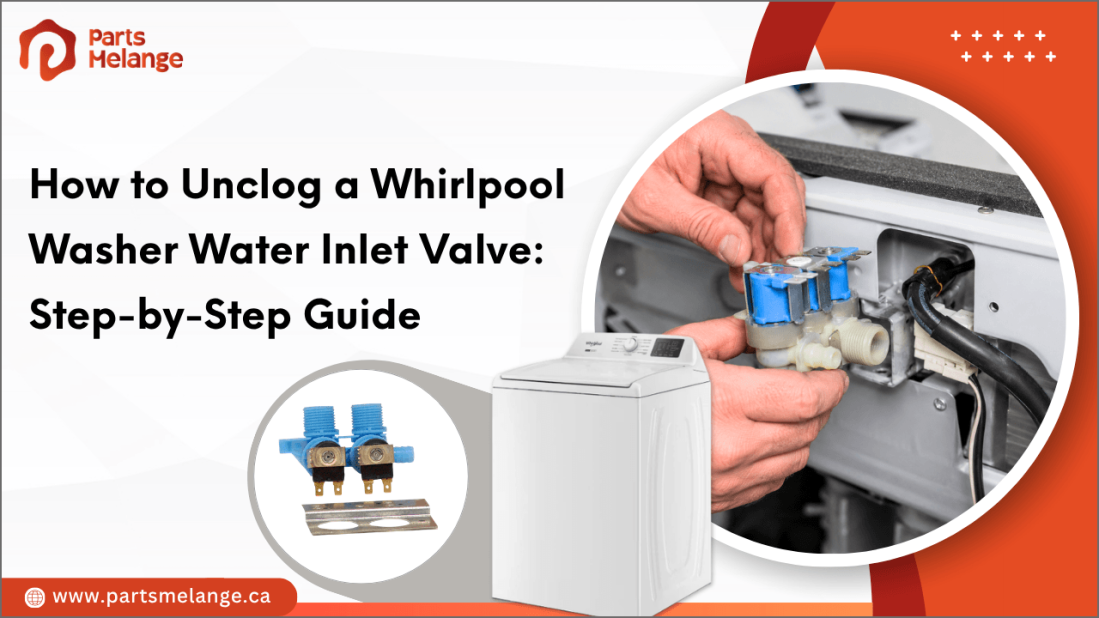
Water flow issues in a Whirlpool washer can quickly affect washing performance and disrupt everyday laundry routines. A Whirlpool washer water inlet valve plays an important role in controlling the flow of hot and cold water during wash cycles. When the valve becomes blocked or restricted, the washer may struggle to operate efficiently, affecting washing performance and cycle completion.
Proper cleaning and maintenance of the water inlet valve can help support proper water flow, improve washer efficiency, and extend appliance performance. With the right tools and careful handling, unclogging the valve can often be completed as part of routine washer maintenance.
This blog explains the signs and causes of a clogged Whirlpool washer water inlet valve, along with steps to safely clean and unclog it.
What Does the Whirlpool Washer Water Inlet Valve Do?
The Whirlpool washer water inlet valve controls the flow of water into the washing machine during each cycle. It regulates when water enters the drum and ensures the right amount of water is supplied based on the selected wash settings. This component plays an important role in maintaining smooth and efficient washer operation.
Key functions of the water inlet valve:
Controls water entry into the washer during cycles
Opens and closes based on cycle requirements
Maintains proper water level for washing and rinsing
Ensures consistent and efficient wash performance
Supports overall cycle accuracy and operation
When the inlet valve is working properly, the washer fills correctly and runs smoothly through each cycle. If it becomes clogged or restricted, it can disrupt water flow and affect washing performance.
Signs Your Whirlpool Washer Water Inlet Valve Needs Cleaning
The Whirlpool washer water inlet valve may show warning signs when it becomes clogged or starts restricting water flow. Identifying these issues early can help avoid washing interruptions and maintain proper performance.
Slow or No Water Filling in Whirlpool Washer Cycles
The washer may take longer than usual to fill or may not fill at all during the wash cycle. This usually happens when debris or mineral buildup blocks proper water flow through the inlet valve.
Weak or Irregular Water Flow Into Whirlpool Washer Drum
Water entering the drum may appear weak, uneven, or inconsistent. This can affect how detergent mixes with water and reduce overall washing effectiveness.
Interrupted Whirlpool Washer Wash Cycles
The machine may pause, restart, or stop unexpectedly during a cycle due to insufficient water reaching the drum, disrupting normal operation.
Water Supply Error Codes on Whirlpool Washer Display
Some Whirlpool washer models may show error codes or alerts related to water intake issues when the inlet valve is partially blocked or malfunctioning.
Poor Cleaning Results in Whirlpool Washer Loads
Clothes may come out less clean or require re-washing because the washer is not receiving enough water to complete the cycle properly.
If these signs appear, the inlet valve may need cleaning or inspection to restore normal washer performance.
Common Causes of a Clogged Whirlpool Washer Water Inlet Valve
Clogging in a Whirlpool washer water inlet valve usually develops over time due to impurities in the water supply and a lack of regular cleaning. These blockages can restrict water flow and affect the washing machine's overall performance.
Below are the common causes of a clogged Whirlpool washer water inlet valve:
Cause | What It Means | Why It Affects Washer Performance |
Hard water mineral buildup | Mineral deposits from hard water collect inside the valve over time | Restricts water flow and slows down filling |
Dirt and sediment in the water supply | Small debris from household plumbing enters the inlet system | Partially blocks or reduces water flow |
Rust from old pipes | Rust particles from old or corroded pipes enter the valve | Causes clogging and uneven water supply |
Dirty inlet filter screens | Filter screens inside the valve trap dirt and debris | Limits water entry into the drum |
Lack of regular maintenance | Valve is not cleaned regularly over time | Leads to a gradual buildup and reduced efficiency |
Understanding these causes can help prevent future blockages and maintain smooth, efficient washer operation.
Explore the Top 7 Dryer Parts You Should Replace to Improve Drying Performance and keep your dryer running efficiently with improved airflow and consistent heating.
Step-by-Step Process to Unclog a Whirlpool Washer Water Inlet Valve
Before starting, gather a few basic tools and follow all safety precautions to ensure a safe and smooth cleaning process.
Tools You May Need
Pliers
Bucket
Small brush
Needle-nose pliers
White vinegar
Soft cloth
Follow these simple steps to safely clean and restore proper water flow in your Whirlpool washer.
Step 1: Turn Off Power and Water Supply
Unplug the washer from the electrical outlet and shut off both hot and cold water supply valves to avoid any risk of leakage or electric shock.
Step 2: Pull the Washer Away From the Wall
Move the washer slightly forward to access the back side where the water inlet hoses are connected.
Step 3: Disconnect the Water Hoses
Carefully remove both inlet hoses using pliers if required. Keep a bucket or cloth ready to collect any remaining water.
Step 4: Inspect the Inlet Screens
Check the small mesh screens inside the valve openings for dirt, debris, or mineral deposits that may be blocking water flow.
Step 5: Clean the Screens Properly
Rinse the screens under clean water and gently scrub with a small brush. For tough buildup, soak them in white vinegar for a few minutes.
Step 6: Reconnect the Water Hoses
Fix the hoses back securely and ensure all connections are tight to prevent leaks.
Step 7: Restore Water and Power Supply
Turn on the water supply and plug the washer back into the power outlet.
Step 8: Run a Test Cycle
Start a short wash cycle to check if water is flowing properly and the washer is filling without issues.
Regular maintenance and timely cleaning of the Whirlpool washing machine parts can help keep your washer running efficiently and prevent future problems.
Tips to Prevent Whirlpool Washer Water Inlet Valve Clogs
Regular care and simple maintenance can help prevent clogs in the Whirlpool washer water inlet valve and keep the machine running smoothly. By following a few basic practices, you can reduce buildup and ensure consistent water flow during every wash cycle.
Tips to prevent water inlet valve clogs:
Clean inlet screens periodically
Check water hoses for dirt or buildup
Use a water softener in hard water areas
Avoid leaving hoses unused for long periods
Inspect and replace old or damaged hoses
Schedule regular washer maintenance
Following these tips can help maintain proper water flow, improve washer efficiency, and extend the life of the water inlet valve.
Summary: Preventing Future Whirlpool Washer Water Inlet Valve Clogs
Preventing clogs in a Whirlpool washer water inlet valve starts with regular cleaning and proper washer maintenance. Dirt, mineral deposits, and debris can gradually restrict water flow, affecting how efficiently the washer fills and performs during each cycle. Routine inspection of the inlet screens and water hoses can help reduce these issues and maintain smooth operation.
Simple preventive steps such as cleaning the valve screens, checking hoses for buildup, and maintaining proper water flow can help extend the life of the washer. Regular maintenance not only improves washing performance but also helps reduce the chances of future water supply problems.
Key Takeaways:
Clogged inlet valves can reduce water flow and affect washing performance
Regular cleaning helps maintain smooth washer operation
Simple tools are enough to unclog and maintain the valve
Preventive maintenance reduces future clogging issues
Shop high-quality home appliance components at PartsMelange to keep your washing machine running efficiently. Find reliable parts such as water inlet valves, filters, hoses, and seals designed to improve water flow, reduce breakdowns, and extend the life of your appliance.
FAQs
How do I access and clean the screens on Whirlpool washers?
Turn off power and water, disconnect hoses, locate inlet screens, gently remove debris with a brush, and rinse with water or vinegar for proper cleaning.
What if cleaning the screens doesn't work on Whirlpool washers?
If cleaning fails, check water pressure, hoses, and inlet valve condition. The valve may be faulty and require replacement to restore proper water flow.
How do I remove the Whirlpool washer valve assembly?
Unplug the washer, shut the water supply, disconnect hoses and wiring, remove screws securing the valve assembly, then carefully detach it from the washer body for replacement.
Why is my Whirlpool washer not filling with water?
It may be due to clogged inlet screens, faulty valve, low water pressure, kinked hoses, or electrical/control issues preventing proper water flow into the washer.
| Disclaimer: This blog is for informational purposes only and provides general guidance on Whirlpool washer water inlet valve cleaning and maintenance. Always follow safety precautions and consult a professional if needed. |





Please complete your information below to login.
Sign In
Create New Account