
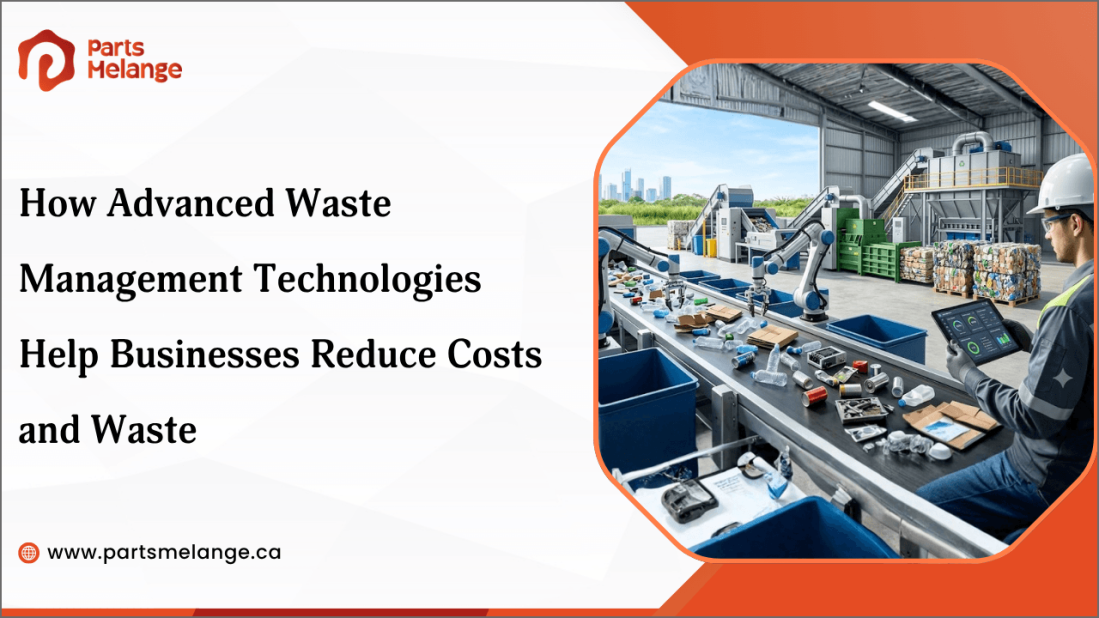
Businesses are increasingly focusing on improving their waste management as part of their overall operational strategy. With growing emphasis on efficiency, compliance, and sustainability, waste management has become a key area where technology is playing a major role. Organizations across industries are exploring smarter ways to track, process, and reduce waste generation.
Advanced waste management technologies are reshaping traditional systems by introducing automation, real-time data tracking, and intelligent sorting methods. These innovations are helping businesses gain better visibility and control over their waste processes.
This blog explores advanced waste management technologies that help businesses reduce costs, minimize waste, and improve efficiency.
Why Businesses Need Advanced Waste Management Solutions Today
Businesses today are dealing with increasing amounts of waste while trying to control rising operational costs and meet stricter environmental standards. Traditional waste management methods often lack efficiency, visibility, and control, which leads to higher expenses and missed opportunities for recycling and optimization. As sustainability becomes a priority, companies need smarter systems to manage waste more effectively.
Key reasons businesses need advanced waste management solutions:
Rising disposal and transportation costs are increasing overall business expenses.
Lack of real-time monitoring makes it difficult to track and manage waste efficiently.
Stricter environmental regulations require accurate reporting and compliance.
Poor waste segregation reduces recycling efficiency and increases landfill usage.
Growing sustainability goals push businesses to reduce environmental impact.
Manual processes are less effective in handling large and complex waste volumes.
These challenges highlight the need for smarter, technology-driven waste management systems that improve efficiency, reduce costs, and support sustainable operations.
Key Advanced Waste Management Technologies Used by Businesses
Businesses are adopting modern waste management technologies to improve efficiency, reduce costs, and gain better control over waste generation and disposal. These solutions use automation, smart tracking, and data insights to make waste handling more effective.
The table below outlines key waste management technologies and the value they bring to modern businesses.
Technology | Function | Key Benefit | Impact |
Smart Waste Sensors | Tracks bin fill levels in real time | Optimizes collection schedules | Reduces pickups by ~20–30% |
IoT Monitoring Systems | Provides live waste tracking data | Improves visibility and control | Boosts efficiency by ~15–25% |
AI Sorting Systems | Separates recyclable materials automatically | Improves recycling accuracy | Increases recycling by ~30–40% |
Waste Analytics Software | Analyzes waste data and trends | Identifies cost-saving areas | Cuts costs by ~10% |
Waste Compactors | Compresses waste volume | Lowers transport costs | Reduces volume by ~50–75% |
These technologies help businesses manage waste more efficiently, reduce unnecessary costs, and improve overall sustainability performance.
How Waste Management Technologies Reduce Costs and Minimize Waste
Advanced waste management technologies help businesses improve efficiency by reducing unnecessary waste generation and optimizing how waste is collected, processed, and disposed of. By using automation, real-time data, and smart tracking systems, organizations can identify inefficiencies and make better operational decisions that directly impact both cost savings and waste reduction.
These waste management technologies support cost savings and waste reduction through:
Lower Waste Collection and Transportation Costs
Smart sensors and IoT systems help businesses schedule waste collection only when needed. This reduces frequent pickups, lowers fuel usage, and cuts transportation expenses.
Improved Recycling and Resource Recovery
AI-powered sorting and automated recycling systems increase the accuracy of material separation. This leads to higher recycling rates and reduces the amount of waste sent to landfills.
Reduced Labor and Operational Effort
Automation in waste handling reduces the need for manual monitoring and sorting. This helps businesses save on labor costs and improve operational productivity.
Better Waste Tracking and Decision Making
Waste analytics tools provide insights into waste generation patterns. Businesses can use this data to reduce excess material usage and improve efficiency in operations.
Minimized Landfill Dependence
By improving recycling and recovery processes, businesses can significantly reduce landfill waste. This reduces disposal expenses and also contributes to achieving sustainability goals.
Overall, these technologies help businesses create a more efficient, cost-effective, and environmentally responsible waste management system.
Best Practices for Implementing Waste Management Technologies Successfully
Businesses can maximize the benefits of waste management technologies only when they are implemented with a clear plan and structured approach. Proper planning ensures smoother adoption, better employee participation, and stronger long-term results in both cost savings and waste reduction.
Assess Current Waste Management Processes
Before adopting new technology, businesses should evaluate their existing waste handling systems. This helps identify inefficiencies, cost drivers, and areas that need improvement.
Choose the Right Technology for Business Needs
Different industries produce different types of waste. Selecting the right mix of smart sensors, AI systems, or analytics tools ensures better results and higher return on investment.
Train Employees and Encourage Adoption
Successful implementation depends on employee participation. Training staff on new systems enhances efficiency and minimizes operational errors.
Integrate with Existing Operations
Waste management technologies should be aligned with current workflows. Proper integration ensures smooth data flow and avoids disruptions in daily operations.
Monitor Performance and Optimize Regularly
Continuous monitoring helps businesses measure savings, recycling improvements, and efficiency gains. Regular optimization ensures long-term effectiveness.
A structured implementation approach helps businesses fully unlock the benefits of advanced waste management technologies.
Summary: Improving Efficiency Through Waste Management Technology
Advanced waste management technologies are transforming how businesses manage waste by introducing smarter, data-driven processes. Solutions such as smart sensors, IoT monitoring systems, AI-powered sorting technologies, and waste analytics platforms help organizations gain better visibility into their waste streams while improving operational efficiency.
These technologies enable businesses to reduce waste-related costs, improve recycling performance, and optimize resource utilization. By adopting the right solutions and implementing them effectively, organizations can build more sustainable waste management practices while supporting long-term business goals.
Key Takeaways
Advanced technologies help businesses manage waste more efficiently.
Smart monitoring systems improve waste tracking and collection processes.
AI-powered sorting enhances recycling accuracy and material recovery.
Waste analytics supports informed decision-making and cost optimization.
Waste compactors help reduce waste volume and transportation needs.
A strategic implementation approach maximizes long-term benefits.
Looking for quality trash compactor parts? PartsMelange offers durable replacement parts, including switches, motors, power nuts, and retainer brackets designed to keep your equipment running efficiently, reduce downtime, and improve overall performance and longevity.
References:
https://www.researchgate.net/publication/377359993_Optimizing_Waste_Management_through_IoT_and
_Analytics_A_Case_Study_Using_the_Waste_Management_Optimization_Test
https://www.sciencedirect.com/science/article/pii/S2352186426002580
How can businesses measure the success of waste management technologies?
Success can be measured through key metrics such as waste reduction rates, recycling performance, collection efficiency, disposal cost savings, and overall sustainability improvements.
How do waste compactors support waste management?
Waste compactors compress waste materials to reduce their volume, allowing businesses to lower storage needs, reduce transportation frequency, and decrease disposal costs.
Are advanced waste management technologies suitable for small businesses?
Yes. Many solutions are scalable and can be adapted to the needs and budgets of small, medium, and large businesses.
Disclaimer: This blog is for informational purposes only and is intended to provide general insights into advanced waste management technologies and their benefits for businesses. |





Please complete your information below to login.
Sign In
Create New Account