
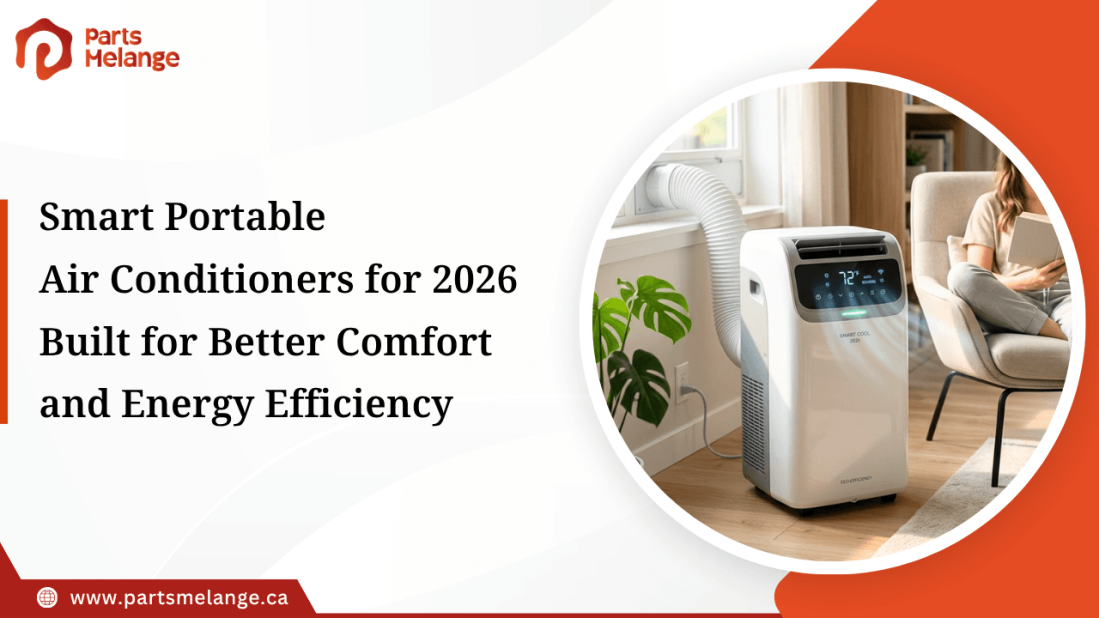
Smart portable air conditioners in 2026 are designed to deliver targeted cooling for individual rooms without the need for permanent installation. They are especially useful in apartments, small homes, and office spaces where traditional HVAC systems may not be practical or cost-efficient. Their compact design allows users to move them between rooms, making them a flexible cooling solution for changing comfort needs.
Modern units also focus on improving energy efficiency through smarter temperature control and automated operation. Instead of running continuously at full power, these systems adjust cooling output based on room conditions, helping maintain consistent comfort while avoiding unnecessary energy use.
This blog explains how smart portable air conditioners in 2026 improve comfort and energy efficiency through smart features, selection tips, and maintenance practices.
Why Smart Portable Air Conditioners Are Becoming Essential in 2026
The demand for smart portable air conditioners is increasing as homes become more flexible and energy-conscious. Many households now prefer cooling only the rooms they actively use instead of operating a whole-home system throughout the day. This approach helps improve cooling efficiency while giving users greater control over indoor comfort.
Key reasons for their growing importance include:
Room-specific cooling control: Focuses cooling only where people are present instead of wasting energy on unused areas
No permanent installation required: Works with a standard power outlet and window exhaust setup, suitable for rental spaces
Improved smart control systems: Use sensors and automated settings to regulate temperature more consistently
Better adaptability for urban housing: Fits compact living spaces where central HVAC systems are not practical
More stable indoor comfort: Adjusts cooling output based on changing room heat conditions like sunlight or appliance usage
Overall, these systems provide a more practical and controlled cooling approach for modern living spaces where flexibility and efficiency matter.
Smart Features That Directly Impact Cooling Efficiency and Power Consumption
Modern smart portable air conditioners are not just Wi-Fi enabled, their features directly affect compressor workload, runtime efficiency, and indoor temperature stability. These systems reduce energy waste by adjusting cooling output based on real-time room conditions instead of running at constant power.
Inverter-Based or Adaptive Compressor Control
Higher-end models use variable-speed compressors instead of fixed-speed cycling.
Fixed-speed units run at full power, shut off, then restart repeatedly
Inverter units adjust cooling output gradually based on demand
Why it matters: This helps reduce temperature swings, lowers high-energy restart spikes, and improves compressor lifespan.
Real-Time Temperature and Humidity Sensors
Smart units use dual sensing to monitor both heat and moisture levels.
Temperature sensors track room heat levels
Humidity sensors detect moisture in the air
Why it matters: Humid air feels warmer than dry air at the same temperature. Systems adjust by improving dehumidification first, preventing unnecessary overcooling and improving comfort.
Wi-Fi & App-Based Load Scheduling
Smart apps allow users to control cooling more precisely.
Daily or weekly scheduling
Remote control through mobile apps
Usage tracking and automation features
Example: Running the unit only during occupied hours helps reduce unnecessary runtime and improves energy control.
Auto-Evaporative Drain Systems
Portable ACs collect condensation during operation.
Modern systems use:
Self-evaporating technology
Moisture reuse for cooling support
Why it matters: Reduces frequent water draining and improves continuous operation in humid conditions.
Multi-Stage Air Filtration Systems
Most units include layered filters for cleaner airflow.
Pre-filter for dust
Fine filter for small particles
Carbon layer for odors
Performance impact: Improves air quality while also keeping internal components cleaner, supporting consistent airflow and efficiency.
These features work together to improve cooling stability while reducing unnecessary power use, ensuring more efficient and consistent performance.
How to Select the Right Smart Portable AC Based on Real Performance Metrics
Choosing a smart portable air conditioner involves more than checking the product specifications. Room conditions, energy efficiency, airflow, smart controls, and noise levels all affect how well the unit cools your space and how efficiently it operates.
Match the Cooling Capacity to Your Room
Select a unit based on your room size, insulation, ceiling height, and sunlight exposure. Rooms with more heat gain may require greater cooling capacity than shaded or well-insulated spaces.
Compare Energy Efficiency
Choose a model with a high energy efficiency rating or an ENERGY STAR certification, if available. Energy-efficient units provide effective cooling while helping reduce electricity consumption.
Evaluate Airflow Performance
Look for adjustable fan speeds and wide air distribution. Good airflow helps cool the room more evenly and reduces hot spots.
Check Smart Features
Choose models with Wi-Fi connectivity, mobile app control, programmable schedules, and voice assistant compatibility for better control and convenient operation.
Consider Noise and Maintenance
If the unit will be used in a bedroom or office, select a model with quiet operation. Also, choose one with washable filters and an easy-to-maintain drainage system for consistent long-term performance.
Considering these performance factors helps you select a smart portable air conditioner that provides efficient cooling, lower energy use, and greater everyday convenience.
Maintenance Practices That Directly Affect Cooling Efficiency and Power Usage
Regular maintenance plays a key role in keeping a smart portable air conditioner operating efficiently. Dust buildup, blocked airflow, and poor drainage can reduce cooling performance, increase compressor workload, and lead to higher electricity consumption. Routine inspection and cleaning help the unit deliver consistent cooling while extending its service life.
Key maintenance practices include:
Clean the air filter regularly: Remove dust and debris from the filter to maintain proper airflow and efficient cooling.
Inspect the exhaust hose: Ensure the hose is securely connected, free from sharp bends, and unobstructed to allow hot air to exit efficiently.
Keep the condenser coils clean: Remove accumulated dust from the coils to improve heat dissipation and reduce strain on the compressor.
Check the drainage system: Inspect the drain port or water tank periodically, especially in humid conditions, to prevent water buildup and unexpected shutdowns.
Wipe air vents and the exterior: Keep the air intake and outlet vents clean to maintain unrestricted airflow and overall system performance.
Following these maintenance practices helps improve cooling efficiency, reduce unnecessary power usage, and keep the portable air conditioner operating reliably throughout the cooling season.
Summary: Smarter Portable Cooling for Better Comfort and Efficiency
Smart portable air conditioners offer a flexible and energy-efficient way to cool individual rooms without permanent installation. With features such as intelligent temperature control, smart connectivity, and improved airflow management, they provide consistent comfort while helping reduce unnecessary energy use.
Choosing a model based on cooling performance, energy efficiency, and smart features, along with regular maintenance, ensures reliable operation and long-term performance. As cooling technology continues to evolve, smart portable air conditioners remain a practical solution for modern homes and workspaces.
Key Takeaways
Smart portable ACs provide efficient room-specific cooling.
Smart features help improve comfort and reduce energy use.
Choose a unit based on cooling performance and room requirements.
Regular maintenance ensures reliable and efficient operation.
These units are ideal for flexible cooling in modern homes and offices.
Shop high-quality home appliance replacement parts at PartsMelange to keep your cooling system running efficiently. Find durable air filters, fan motors, thermostats, control boards, and other essential components to maintain reliable performance and help extend the lifespan of compatible air conditioner models.
Reference:
https://www.energystar.gov/products/room_air_conditioners
https://www.hvacbase.org/portable-air-conditioners
FAQs
Can I control a smart portable air conditioner remotely?
Most smart models allow remote operation through a mobile app and may also support voice assistants for hands-free control.
How often should I clean a smart portable air conditioner?
The air filter should be cleaned regularly according to the manufacturer's recommendations, and the exhaust hose, coils, and drainage system should be inspected periodically.
Do smart portable air conditioners require permanent installation?
No. They are designed for easy setup using a window exhaust kit and can be moved between rooms without permanent modifications.
Disclaimer: This blog is for informational purposes only and provides general information about smart portable air conditioners, their features, selection, and maintenance. |


Please complete your information below to login.
Sign In
Create New Account